12 meetings with procurement teams at mid-market food and CPG brands
A corrugated and packaging manufacturer with spare capacity. We aimed at one real pain for buyers: lead times on seasonal runs.
The challenge
The plant had added a new line and had capacity to fill, but their sales team was three people who spent most of their time on existing accounts. Trade shows produced business cards, not conversations.
Packaging buyers are hard to reach and rarely switch suppliers on a whim. A switch usually starts with a small trial run, so the goal was qualified conversations that could lead to one.
Our approach
Targeting
- 190 food, beverage and consumer goods brands within freight range of the plant, between $20M and $250M in revenue, that ran seasonal or promotional packaging.
- Found the person who owns packaging sourcing (often a procurement manager, sometimes the operations or supply chain lead) and confirmed each one by hand.
- Skipped brands owned by large groups with central purchasing, since those decisions are not made locally.
Copy angle
The angle was lead times on seasonal and promo runs, a real and common pain. The email stated a specific turnaround the plant could actually hold and offered spec sheets plus a relevant sample.
We wrote it the way a buyer talks: dimensions, turnaround, minimums. No adjectives about quality or partnership.
Deliverability
- Two secondary domains, six inboxes, warmed for 21 days. Spec sheets were only sent as a reply after someone asked, never attached to a cold email.
- Sending stayed under 25 a day per inbox, which kept placement steady across Google and Microsoft recipients over all seven weeks.
The first email
This is the first step of the sequence as it was sent, with the research fields highlighted. Every highlighted value came from our own research on that account.
Hi {{first_name}},
Seasonal promo runs tend to be where corrugated lead times hurt most: custom displays and shippers that have to land in a three week window.
We are a 120-person packaging manufacturer in {{region}}, and we hold 10 to 15 business days on custom corrugated for mid-market food and CPG brands.
If useful, I can send spec sheets and a sample shipper we make for a brand similar to {{company}}. Who handles packaging sourcing on your side?
Alex
Results
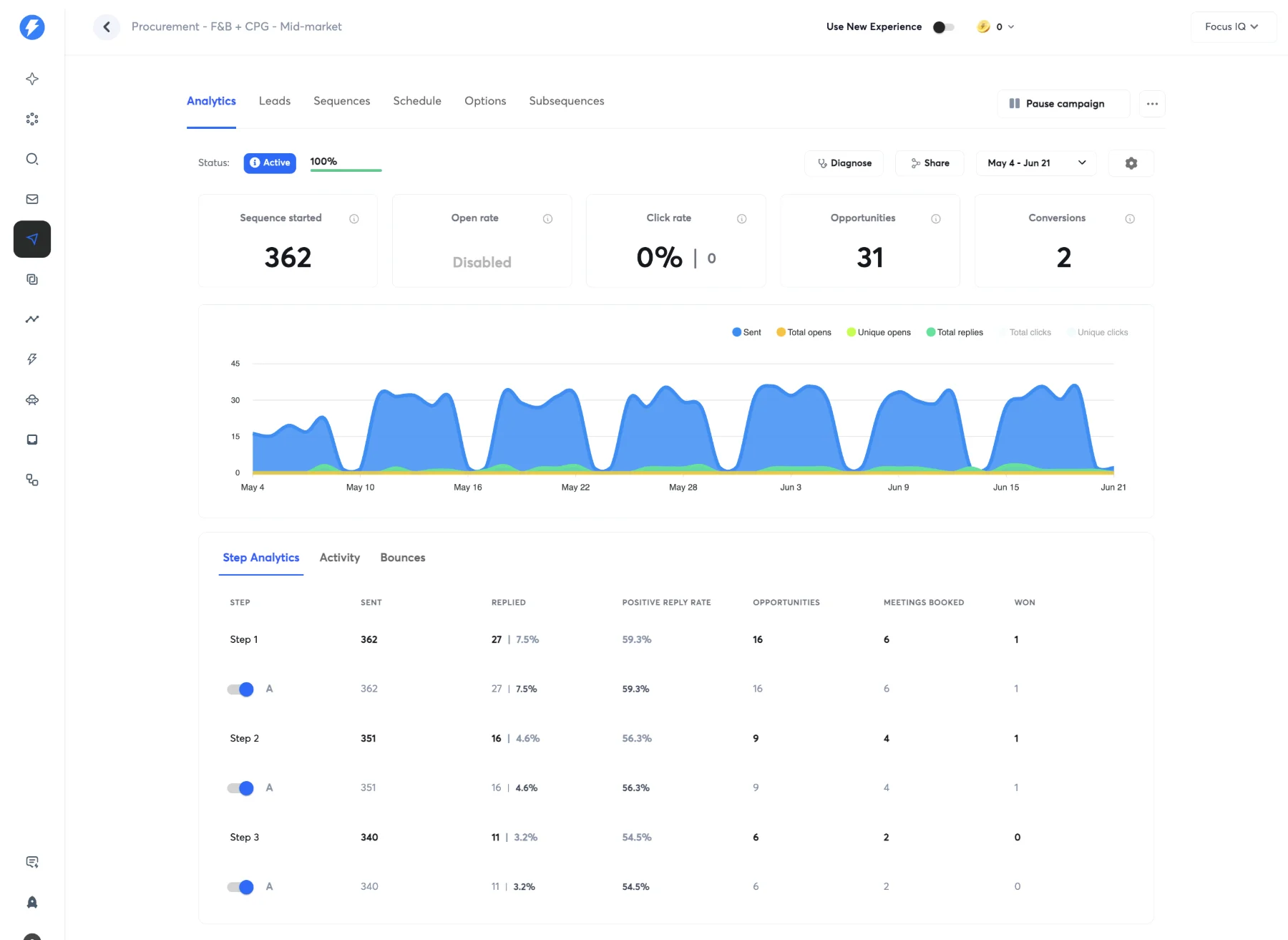
54 replies from 1,053 emails (5.1%) and 31 positive replies. 12 buyers booked a call, and nine asked for samples or a quote on a specific item.
Two brands placed trial orders within the campaign window, with a third moving to an annual quote for the following season.

- Emails sent1,053
- Human reply rate5.1%
- Positive reply rate2.9%
- Meetings booked12
- Emails per meeting booked88
- Trial orders placed2
Let's find the 300 accounts that matter to you.
A 30 minute call. We will look at your market, tell you honestly whether outbound fits, and sketch the first campaign.